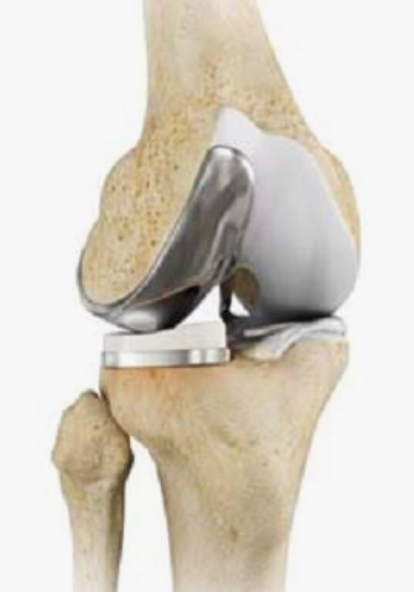
Partial Knee Replacement and Cost-Effectiveness: What a Model Can Tell Us
A cost-effectiveness model favored surgery over long-term nonsurgical care in many age groups and favored partial over total knee replacement. The conclusions depend on assumptions and do not decide an individual patient's operation.
Partial Knee Replacement and Cost-Effectiveness: What a Model Can Tell Us
A mathematical model concluded that surgery was more cost-effective than continued nonsurgical treatment for many patients with end-stage arthritis limited to one knee compartment. Within the same model, partial knee replacement produced lower modeled costs and greater modeled benefit than total knee replacement across the ages studied.
Those are population-level economic findings. They do not determine whether a specific patient is a surgical candidate, which operation is appropriate, or what the actual cost will be.
Why This Question Matters
Treatment decisions affect more than the price of an operation. Severe knee arthritis may create ongoing costs from medication, injections, office visits, imaging, missed work, disability, and reduced quality of life. Surgery has a large upfront cost but may reduce some of those long-term burdens.
Health economists use cost-effectiveness analysis to compare both cost and health benefit. The goal is not simply to select the cheapest treatment. The goal is to ask how much health benefit is gained for the resources spent.
What the Researchers Studied
The researchers created a Markov decision model for hypothetical patients with end-stage unicompartmental knee osteoarthritis. The model compared three strategies: continued nonsurgical treatment, unicompartmental knee arthroplasty or partial knee replacement, and total knee arthroplasty or total knee replacement.
Separate models began treatment at five-year age intervals from 40 through 90. The investigators used published estimates for surgical costs, ongoing nonsurgical costs, complications, rehabilitation, implant failure, quality of life, missed work, disability, and other indirect costs.
The model used quality-adjusted life-years, or QALYs, to combine the length and quality of life into one measure. It also used a willingness-to-pay threshold of $50,000 per QALY. Importantly, the model assumed that patients assigned to nonsurgical care never crossed over to surgery.
What the Model Found
In the base model, partial and total knee replacement were less costly and produced more QALYs than continued nonsurgical treatment for patients beginning treatment from ages 40 through 69. Economists describe that result as "dominance": greater modeled benefit at lower modeled cost.
Beginning at age 70, the surgical strategies became more costly than nonsurgical care, but their additional benefit remained below the model's willingness-to-pay threshold. Within the model, surgery therefore remained a cost-effective option at older ages rather than becoming automatically unreasonable.
When the two operations were compared, partial knee replacement dominated total knee replacement at every starting age studied. The authors also estimated potential lifetime societal savings of approximately $987 million to $1.5 billion for each annual group of patients if more eligible patients received partial rather than total replacement.
Those savings were modeled estimates. They were not observed national savings.
What Cost-Effective Means
Cost-effective does not mean cheapest. A treatment can cost more and still be cost-effective when it provides enough additional health benefit. It also does not mean that an insurer, hospital, surgeon, or patient will experience the exact modeled cost.
A QALY is a population-level tool. It cannot measure every outcome a patient values, and it cannot decide whether an operation is technically appropriate. The model is most useful for understanding how long-term costs and quality of life may interact across large groups.
Why the Assumptions Matter
Every model is built from assumptions. In this study, patients in the nonsurgical group remained there for life and never later underwent replacement. Real patients often move from exercise, medication, or injections to surgery when symptoms progress.
The model also treated nonsurgical costs and quality of life as relatively stable, used historical cost inputs, estimated indirect costs from survey-based equations, and relied partly on registry data for revision risk. A different set of assumptions could change the size of the advantage or, in some age groups, the preferred strategy.
What the Study Does Not Prove
- It was a mathematical model, not a randomized trial or direct comparison of actual patients.
- It does not prove that everyone younger than 70 should have surgery.
- It does not prove that nonsurgical treatment is useless or should be skipped.
- It does not make a patient eligible for partial knee replacement.
- It does not guarantee that partial replacement will cost less or function better for an individual patient.
- The national savings estimate depends on the model assumptions and the number of truly eligible patients.
Dr. Blythe's Practical Take
Cost should never make the diagnosis. The operation must first fit the anatomy and fully address the painful structural problem.
Partial knee replacement may be an excellent option when arthritis is truly limited to one compartment and the ligaments, alignment, stability, and remaining joint are suitable. Total knee replacement may be the better operation when disease is more extensive. Continued nonsurgical care may remain appropriate when symptoms are manageable, surgical risk is excessive, or the patient is not ready for an operation.
For patients in Oklahoma City, the sequence should remain traditional and sound: diagnose the problem, define the treatment options, determine surgical eligibility, discuss the tradeoffs, and only then consider cost and long-term value.
Questions to Discuss Before Making a Decision
- Is the arthritis truly limited to one compartment?
- Would partial replacement completely address the painful pathology?
- What are the expected revision and complication risks in my case?
- What nonsurgical treatments remain reasonable, and what are their goals?
- How do recovery, time away from work, and long-term function affect the overall value of each option?
Bottom Line
This model suggests that the long-term value of surgery may be greater than the upfront price alone suggests, and that partial knee replacement may offer strong economic and quality-of-life value in properly selected patients.
But a model cannot examine a knee. Anatomy, symptoms, stability, imaging, medical risk, surgeon experience, and patient goals must determine whether partial replacement, total replacement, or continued nonsurgical care is appropriate.
Frequently Asked Questions
What does it mean when one treatment "dominates" another?
In cost-effectiveness analysis, a treatment dominates when the model estimates that it provides greater health benefit at lower cost. That is a modeled population result, not a guarantee for an individual patient.
Does age determine whether I should have knee replacement?
No. Age influences risk, durability, recovery, and the time available to benefit from surgery, but it is only one factor. Symptoms, anatomy, medical health, function, and goals remain essential.
Why can a model not decide whether I qualify for partial replacement?
Eligibility requires an examination and imaging. The arthritis must be confined to the appropriate compartment, and the ligaments, alignment, motion, and stability must be suitable. Economic estimates cannot supply that information.
Source: Kazarian GS, Lonner JH, Maltenfort MG, Ghomrawi HMK, Chen AF. Cost-Effectiveness of Surgical and Nonsurgical Treatments for Unicompartmental Knee Arthritis: A Markov Model. J Bone Joint Surg Am. 2018;100:1653-1660. doi:10.2106/JBJS.17.00837.
This article is for general educational purposes and does not replace an individualized diagnosis or treatment recommendation. Medical decisions should be made with a qualified clinician who has reviewed the patient's history, examination, imaging, and goals.
Explore Topics
Written by
Joseph Blythe, DO
Content creator and writer sharing insights and stories.