Partial or Total Knee Replacement? What Patients Value Most
Partial and total knee replacement involve different tradeoffs. A patient-preference study found that complication risk and the chance of another operation mattered more than any single promised benefit.
Partial or Total Knee Replacement? What Patients Value Most
When patients compare partial and total knee replacement, they do not all value the same outcome. In one study, the two issues that mattered most were the chance of a serious complication and the chance of needing another operation later.
That finding does not make one operation better than the other. It supports a more useful discussion: which operation fits the actual pattern of arthritis, and which tradeoffs matter most to the individual patient?
Why This Question Matters
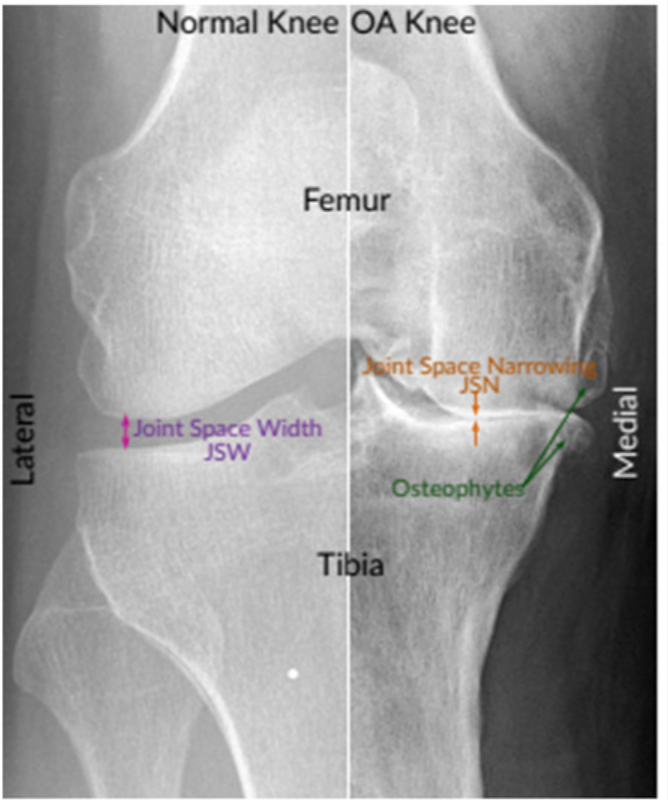
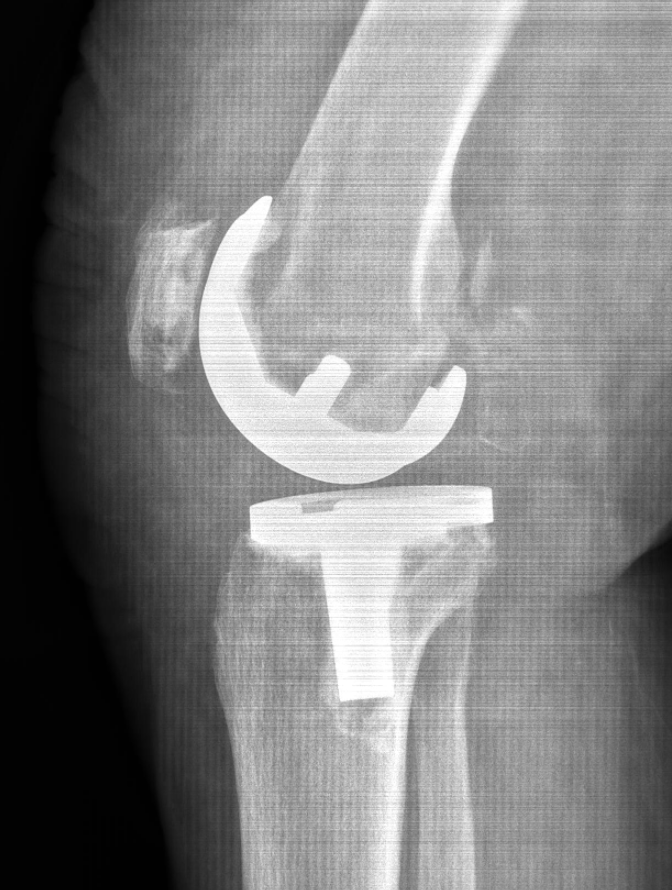
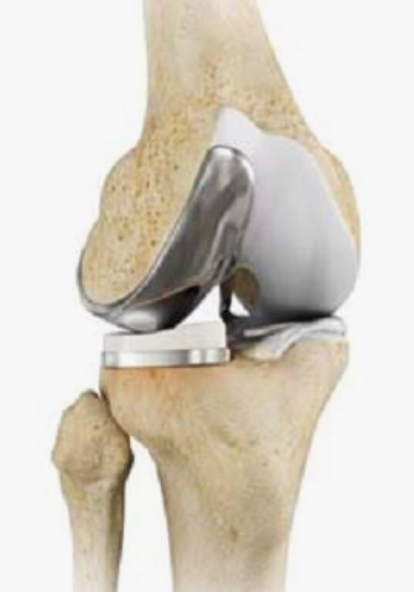
A total knee replacement, or total knee arthroplasty, resurfaces all three compartments of the knee. A partial knee replacement, also called a unicompartmental knee arthroplasty, treats only the diseased compartment and preserves more of the patient's native knee.
The operations are not interchangeable. Partial replacement may offer a less extensive operation and, in properly selected patients, good function and a more natural-feeling knee. It also carries a recognized risk of later revision. Total replacement treats a broader pattern of arthritis and generally has strong long-term implant survival, but it is a larger operation and not every patient feels that the knee is completely normal afterward.
The decision therefore involves anatomy, expected benefit, complication risk, long-term durability, and the patient's functional goals.
What the Researchers Studied
The researchers enrolled adults with knee osteoarthritis and used a discrete-choice experiment. Instead of assigning patients to surgery, the study presented hypothetical operations with different combinations of benefits and risks. Patients repeatedly chose between those options.
The four attributes were the chance of a serious complication, expected function after recovery, awareness of the knee implant, and the chance of another operation within ten years. The 258 completed surveys were divided according to baseline knee function: 72 patients had relatively good function, and 186 had fair or poor function.
What the Study Found
In both functional groups, serious complications and the chance of another operation were the most important considerations. Patients with worse baseline function placed more importance on the amount of functional improvement they might gain. Patients with better function were more likely to identify sports and higher activity as important goals.
The predicted choices were close rather than one-sided. Among patients with relatively good function, 58% were predicted to choose partial knee replacement and 42% total knee replacement. Among patients with fair or poor function, 46% were predicted to choose partial replacement and 54% total replacement.
Those numbers show that reasonable patients can look at the same tradeoffs and make different choices.
What Those Numbers Mean
The study did not find that patients simply wanted the smallest operation or the operation with the best possible function. They placed substantial weight on avoiding serious complications and avoiding another operation.
It also showed why the conversation changes with baseline function. A patient who can still perform most daily activities may focus on sports, implant awareness, and the disruption of surgery. A patient who is struggling to walk, climb stairs, or complete ordinary daily tasks may place greater value on reliable functional improvement.
The nearly even split between procedures is important. There is no single preference that represents every patient with knee osteoarthritis.
Preference Is Not the Same as Eligibility
A patient may prefer a partial knee replacement and still not be a candidate. The operation requires the arthritis to be limited to the appropriate compartment and the rest of the knee to be suitable for preservation. Ligament function, deformity, stability, range of motion, symptoms, and imaging all matter.
Likewise, a patient should not automatically receive a total knee replacement simply because it is the more familiar operation. The least disruptive operation that safely and completely addresses the problem should be considered, but it must actually address the full problem.
What the Study Does Not Prove
- It was a study of hypothetical choices, not actual operations or postoperative outcomes.
- It does not prove that partial knee replacement produces better function for every patient.
- It does not prove that total knee replacement is more durable for every implant, surgeon, or patient.
- It does not establish whether a particular participant was medically eligible for partial replacement.
- It was performed at a single academic medical center with a smaller good-function group.
- The study was funded by Zimmer Biomet, although the article states that the company played no role in the study.
Dr. Blythe's Practical Take
The useful question is not, "Which operation is better?" The useful question is, "Which operation completely treats this patient's arthritis with the least unnecessary disruption?"
A proper discussion includes the pattern of arthritis, ligament integrity, deformity, stability, complication risk, expected function, how natural the knee may feel, and the possibility of a future revision. Patient preference matters, but it has to operate within sound surgical indications.
For patients in Oklahoma City considering knee replacement, imaging and examination should come before a procedure preference. The operation should be chosen for the patient and the pathology, not because one option is newer, smaller, or more heavily marketed.
Questions to Discuss Before Making a Decision
- Is my arthritis limited to one compartment or present throughout the knee?
- Are my ligaments, alignment, and knee stability suitable for partial replacement?
- What are the expected complication and revision risks for each option in my case?
- Which activities am I realistically trying to regain?
- Would a partial replacement fully address the source of my symptoms?
Bottom Line
Patients considering knee replacement care about more than pain relief. Serious complications and the chance of another operation carry substantial weight, and patients with different levels of function may value the tradeoffs differently.
The right operation is the one that matches the anatomy, treats the full problem, and aligns with informed patient goals.
Frequently Asked Questions
Does a partial knee replacement recover faster?
Partial replacement is a less extensive operation and may offer advantages for selected patients, but recovery varies. The more important first question is whether the arthritis pattern and knee anatomy make partial replacement appropriate.
Does partial knee replacement always feel more natural?
Some patients report less implant awareness after partial replacement, but no operation can guarantee a natural-feeling knee. Pain, strength, alignment, motion, expectations, and implant position all influence the result.
Can I choose a partial knee replacement if I prefer it?
Preference is part of shared decision-making, but it cannot replace surgical eligibility. The arthritis must be limited to the correct compartment, and the knee must meet the clinical and structural requirements for the procedure.
Source: Hutyra CA, Gonzalez JM, Yang JC, et al. Patient Preferences for Surgical Treatment of Knee Osteoarthritis: A Discrete-Choice Experiment Evaluating Total and Unicompartmental Knee Arthroplasty. J Bone Joint Surg Am. 2020;102:2022-2031. doi:10.2106/JBJS.20.00132.
This article is for general educational purposes and does not replace an individualized diagnosis or treatment recommendation. Medical decisions should be made with a qualified clinician who has reviewed the patient's history, examination, imaging, and goals.
Explore Topics
Written by
Joseph Blythe, DO
Content creator and writer sharing insights and stories.