
About
Dr. Blythe
Orthopedic Spine Surgeon, Blythe Orthopedics & Spine
Background & Training
Dr. Blythe is a board-certified orthopedic surgeon with fellowship training in spine surgery. He has been in clinical practice for over 18 years, providing surgical and nonsurgical care for disorders of the spine, sacroiliac joint, shoulder, and knee.
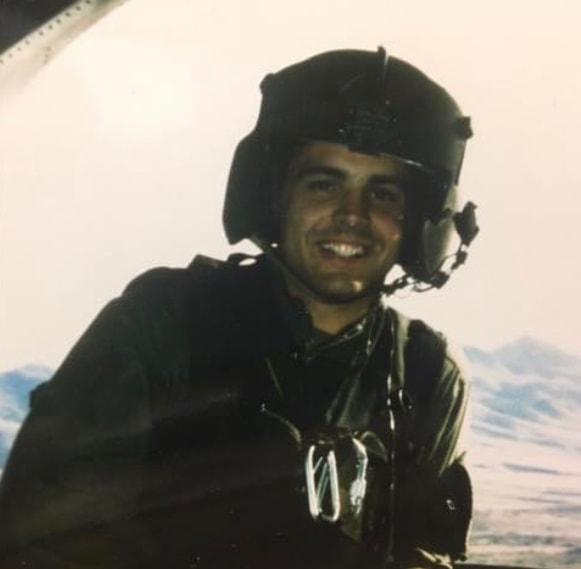
He completed his medical training at Des Moines University (2008), followed by an orthopedic surgery residency at Henry Ford Macomb Michigan (2013) and a fellowship in spine surgery at Spine Institute of Arizona (2014). Before and alongside his medical career, Dr. Blythe served 27 years in the United States military, enlisting in the U.S. Army in 1991 as a medic and later commissioning as a Medical Service Corps Officer in the Air National Guard, where he served as an Orthopedic Spine Surgeon.
His approach is grounded in thorough evaluation and honest communication. Patients receive a clear explanation of their diagnosis, a realistic assessment of their options, and a direct recommendation. Not a sales pitch for the most aggressive intervention available.
Credentials
Military Service
Dr. Blythe served 27 years in the United States military across two branches, enlisting as a Combat Medic (91A) and retiring as a commissioned officer (Major - O4E) and surgeon. His service spanned active duty, combat deployment, and a career-long parallel commitment to the Guard alongside his civilian surgical practice.
U.S. Army
1991 to 2005 · 14 yearsEnlisted, Basic Training
Fort Sill, Oklahoma, 1991
Combat Medic AIT
Fort Sam Houston, Texas, 1992
Air Cavalry, Fort Campbell
Assigned following AIT
Special Operations Flight Medic
160th Special Operations Aviation Regiment (SOAR), the Night Stalkers
Senior Medic, Combat Deployment
1139th Military Police Company, Baghdad, Operation Enduring Freedom and Operation Iraqi Freedom
Final Rank
Staff Sergeant (E-6)
Air National Guard
2005 to 2018 · 13 yearsCommissioned Officer
Medical Service Corps, commissioned following completion of medical training
Orthopedic and Spine Surgeon
Served in a surgical capacity concurrent with civilian practice
Philosophy of Care
Not every spine problem requires surgery. Many conditions respond well to conservative management: physical therapy, medication, injections, or simply time. Surgery is appropriate when conservative treatment has failed, when the problem is structural and unlikely to resolve on its own, or when the risk of waiting outweighs the risk of intervention.
The right course depends on the cause of the problem, the severity of symptoms, and the patient's overall health and goals. Dr. Blythe will explain the options, the tradeoffs, and the expected outcomes of each, and give a direct recommendation.
Patients who understand their condition make better decisions about their care. That is the standard this practice holds itself to.
"The right course depends on the cause of the problem. We will explain the options, the tradeoffs, and the next step."
Surgical Approach
Dr. Joseph Blythe performs endoscopic and true minimally invasive spine surgery for appropriately selected conditions. These operations use direct surgical visualization and muscle-sparing operative corridors to remove the disc, bone, ligament, or other structure compressing the spinal nerves or spinal cord. When stabilization is necessary, minimally invasive instrumentation and fusion techniques may be used. His surgical practice also includes minimally invasive sacroiliac joint fusion for appropriately selected patients whose symptoms have been traced to dysfunction, degeneration, or instability of the sacroiliac joint.
The objective is not simply to make a smaller incision. It is to accomplish the complete surgical decompression or stabilization while avoiding unnecessary disruption of normal muscles, bone, and supporting structures. The least disruptive operation that safely and completely addresses the problem is selected for each patient.
Procedures Performed
Minimally invasive surgery is not forced when a conventional approach would be safer, more complete, or more appropriate. The operation is chosen according to the pathology, not according to a marketing label.
Schedule a consultation.
Call the office directly or submit a request online. We will follow up within one business day.