Extended-Release Steroid Injections for Knee Arthritis: What the Trial Found
An extended-release steroid injection improved knee osteoarthritis pain compared with saline at 12 weeks. The same trial did not show clear superiority over standard triamcinolone on its prespecified daily-pain comparisons.

Extended-Release Steroid Injections for Knee Arthritis: What the Trial Found
A randomized clinical trial found that one extended-release triamcinolone injection improved knee osteoarthritis pain more than a saline injection at 12 weeks. The same trial did not show that it was clearly better than standard triamcinolone on the prespecified average-daily-pain comparisons.
That distinction matters. Better than placebo is not automatically the same as better than the standard treatment.
Why This Question Matters
Corticosteroid injections have been used for decades to reduce knee pain and inflammation. Their benefit is usually temporary. An extended-release formulation was developed to keep triamcinolone in the joint longer and reduce rapid movement of the medication into the bloodstream.
Patients reasonably want to know whether the newer formulation provides more relief, lasts longer, or is safer than a conventional steroid injection. A well-designed trial can answer some of those questions, but only if the results are read in the order the study planned them.
What the Researchers Studied
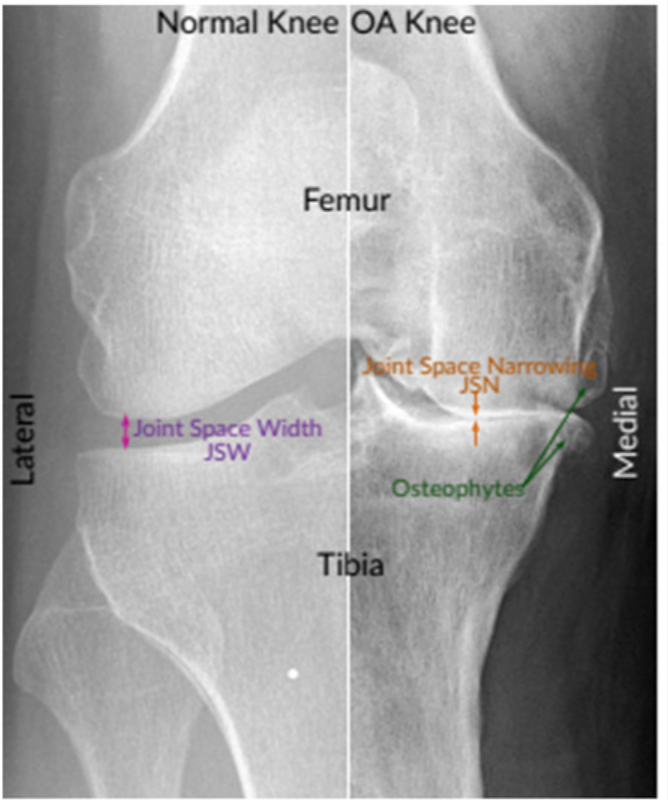
This was a Phase 3, multicenter, double-blinded randomized trial involving 484 treated patients. Participants were at least 40 years old, had Kellgren-Lawrence grade 2 or 3 knee osteoarthritis, and reported moderate to severe baseline pain.
Patients were assigned to one of three single-injection groups: 32 mg of the extended-release triamcinolone formulation, a saline placebo, or 40 mg of standard triamcinolone crystalline suspension. The trial followed patients for 24 weeks.
The primary outcome was the change in average daily pain from baseline to week 12 for extended-release triamcinolone compared with saline. Comparisons with standard triamcinolone were secondary, and several measures of pain, stiffness, function, and quality of life were exploratory outcomes.
What the Study Found
At week 12, average daily pain improved by 3.12 points in the extended-release group and 2.14 points in the saline group on a 0-to-10 scale. The difference was approximately 0.98 point and was statistically significant. The trial therefore met its primary endpoint.
The prespecified average-daily-pain comparisons between the extended-release formulation and standard triamcinolone were not statistically significant. In other words, the trial did not establish clear superiority over the conventional steroid injection on those planned pain measures.
Exploratory WOMAC measures of pain, stiffness, and physical function, along with a knee-related quality-of-life measure, favored the extended-release formulation over standard triamcinolone at several time points. Adverse-event rates were generally similar among the three groups, and most events were mild or moderate.
Primary Outcomes and Exploratory Outcomes Are Not the Same
Clinical trials identify their primary outcome before the results are known. That outcome is the main question the study is designed and powered to answer. Secondary and exploratory outcomes can provide useful information, but they should not be presented as though they replaced a negative prespecified comparison.
Here, the strongest conclusion is that the extended-release injection improved pain more than saline at week 12. The trial also generated encouraging exploratory findings for function and quality of life. It did not prove that the medication was universally better than a standard triamcinolone injection.
What the Study Does Not Prove
- It does not prove that one injection will provide three months of relief for every patient.
- It does not prove that the extended-release formulation is always better than standard cortisone.
- It does not establish the safety or effectiveness of repeated injections.
- It does not show that the injection restores cartilage, corrects deformity, or reverses osteoarthritis.
- It does not prove that the injection prevents or permanently delays knee replacement.
- The selected study population may not represent every patient, including some patients with poorly controlled diabetes.
Funding and Conflict Disclosure
The trial was sponsored and funded by the company developing the medication, and two authors were company employees. The article describes independent data management and statistical procedures, but industry sponsorship remains relevant when interpreting the results. It does not invalidate the trial. It does require that the claims stay close to the prespecified findings.
Dr. Blythe's Practical Take
A knee injection is a symptom-management treatment. It may be reasonable when temporary pain relief would help a patient remain active, complete rehabilitation, manage a flare, or postpone surgery for a defined reason. It is not a structural repair.
The decision should consider the diagnosis, severity of arthritis, medical conditions, prior response to injections, expected duration of benefit, cost, and whether knee replacement may be approaching. A newer delivery system should not be selected simply because it is newer or branded.
For patients receiving knee care in Oklahoma City, the first question is still whether the pain is actually coming from osteoarthritis and whether an injection serves a clear purpose in the overall treatment plan.
Questions to Discuss Before Making a Decision
- What is the specific goal of the injection in my case?
- How did I respond to previous steroid injections?
- How long is relief realistically expected to last?
- How do my diabetes, blood pressure, infection risk, or other medical conditions affect the decision?
- Could this injection interfere with the timing of a possible knee replacement?
Bottom Line
The trial supports a straightforward conclusion: the extended-release triamcinolone formulation improved knee osteoarthritis pain compared with saline at 12 weeks. It did not clearly outperform standard triamcinolone on the prespecified average-daily-pain comparisons.
The injection may be one option for selected patients, but it remains temporary symptom treatment rather than a cure for arthritis.
Frequently Asked Questions
Is an extended-release steroid injection better than a regular steroid injection?
This trial did not show statistically significant superiority on the prespecified average-daily-pain comparisons. Some exploratory measures favored the extended-release formulation, so the choice should be individualized rather than treated as an automatic upgrade.
Does the injection rebuild cartilage?
No. The trial evaluated pain, stiffness, function, quality of life, and safety after one injection. It did not show cartilage restoration or reversal of osteoarthritis.
Can the injection be repeated safely?
This study evaluated a single injection. It cannot establish the safety or effectiveness of repeated administration. Repeat treatment requires a separate medical discussion based on current evidence and the patient's condition.
Source: Conaghan PG, Hunter DJ, Cohen SB, et al. Effects of a Single Intra-Articular Injection of a Microsphere Formulation of Triamcinolone Acetonide on Knee Osteoarthritis Pain. J Bone Joint Surg Am. 2018;100:666-677. doi:10.2106/JBJS.17.00154.
This article is for general educational purposes and does not replace an individualized diagnosis or treatment recommendation. Medical decisions should be made with a qualified clinician who has reviewed the patient's history, examination, imaging, and goals.
Explore Topics
Written by
Joseph Blythe, DO
Content creator and writer sharing insights and stories.